
1. Korea Has Its Own “Akiya” Market (And Foreigners Can Buy Them!)
Korea is experiencing its own “Binjib” (빈집 - empty house) phenomenon. Rural areas have an abundance of vacant homes, and unlike many other Asian nations, South Korea has relatively low restrictions on foreign property ownership.
The best part? The sheer variety of homes available. Whether you are looking for a move-in-ready modern home nestled in a valley, or you want to roll up your sleeves and restore a beautiful, historic Hanok (traditional Korean house) to its former glory, the market is incredibly diverse. At K-Rural, we curate these abandoned property listings to help you bypass language barriers and secure these properties at unbelievably affordable costs.
The number of abandoned homes in Korea reached 1.53 million in 2023 amid an aging population and urban migration trends. (The Korea Times, 2025)
2. World-Class Internet in the Middle of Nowhere
The biggest fear for any digital nomad moving to the country is losing their connection to work. In Korea, that simply isn’t an issue. South Korea’s infrastructure is unmatched. You can be surrounded by sprawling rice paddies and mountains and still have gigabit-speed fiber internet piped directly to your restored countryside home. With remote working options on the rise, you can flawlessly maintain your career while enjoying total country peace.
South Korea has the highest share of full fiber connections globally, with almost 89% of all broadband connections being fiber-based as of June 2023, significantly higher than the OECD average of around 41%. (OECD, 2024)
3. You Are Never Truly Isolated (The Power of KTX)
Countryside living usually means being entirely cut off from the world, but not in Korea. Thanks to South Korea’s brilliant high-speed rail networks (KTX and SRT) and express bus systems, you can live in a peaceful southern village and still be in central Seoul for a meeting, a networking event, or a weekend of shopping in just over two hours. You get all the beauty of the countryside without sacrificing access to a major global metropolis.
The Korea Train Express (KTX) reaches top speeds of 305 km/h (190 mph), allowing you to travel from southern coastal cities like Busan all the way to central Seoul in just 2.5 hours. (Korea Railroad Corporation, 2023)
4. The Convenience Culture Follows You
You don’t have to give up modern comforts to live near nature. Even in smaller rural towns, the high Korean standard of convenience remains intact. 24/7 convenience stores like CU and GS25 are ubiquitous, and Korea’s famous, lightning-fast delivery culture often extends surprisingly far out of the city centers.
South Korea has a staggering density of convenience stores, with over 42,000 nationwide—equating to roughly one convenience store for every 1,350 people. (Bum Ju, 2023)
5. Untouched Natural Landscapes
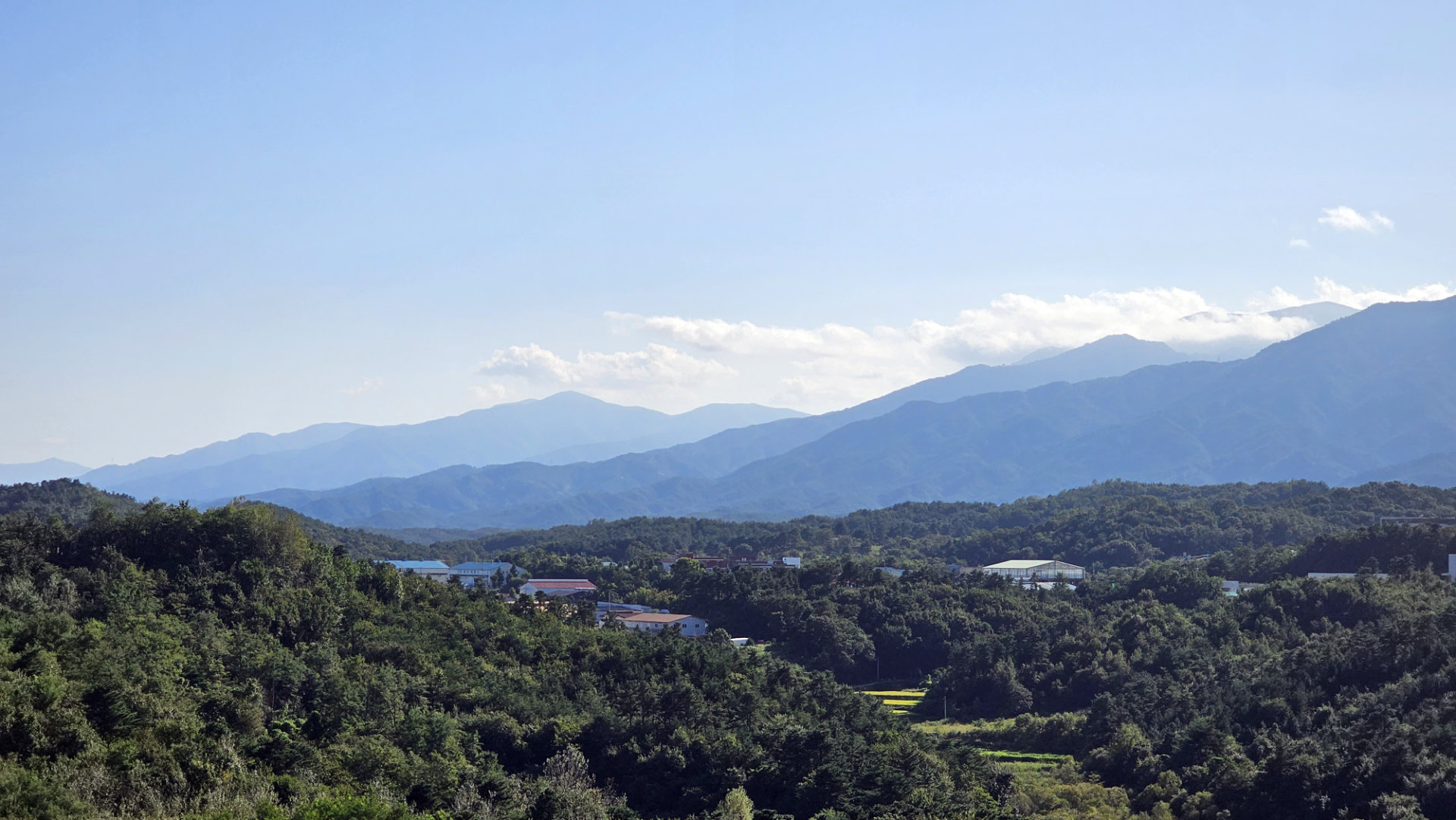
The physical act of leaving the city acts as a hard reset for your brain, offering a true cure for urban burnout. The Korean countryside is visually stunning—filled with rolling mountains, winding coastal roads, and breathtaking national parks. The rural pace gently forces you to slow down, listen to nature, and escape the hyper-competitive energy of urban life.
Approximately 70% of South Korea’s territory is covered by mountainous terrain, offering endless access to untouched natural landscapes and outdoor recreation right from your doorstep. (Ministry of Culture, Sports and Tourism, 2023)
6. Authentic Community and a Faster Path to Residency
Leaving the city bubbles allows for a deeper, more genuine Korean experience rooted in community. Older locals are famously warm and often thrilled to welcome new faces. Moreover, the South Korean government actively encourages foreigners to settle in these depopulating areas by offering specialized visa options.
The F-2-R Regional Specialized Visa, introduced in 2023, grants long-term residency for up to 5 years to foreigners who live in designated population-declining regions, engage in local employment or entrepreneurship, and provides a clear pathway to permanent residency. (Ministry of Justice, 2024)
Ready to start your Korean countryside adventure? The rural dream is more accessible than ever. Check out K-Rural’s latest property listings to find your perfect countryside escape today!
References
Bum Ju, S. (2023). A Fact-Finding Analysis on the Convenience Store Use of Korean University Students in their 20s and Health Variables. Iranian Journal of Public Health.
Korea Railroad Corporation. (2023). High-speed Rail Operations and Timetables.
Ministry of Culture, Sports and Tourism. (2023). Facts about Korea: Geography.
Ministry of Justice. (2024). F-2-R Regional Specialized Visa Guidelines.
OECD. (2024). Broadband statistics update.
The Korea Times. (2025). Number of abandoned homes reaches 1.53 mil. in 2023 amid aging population.